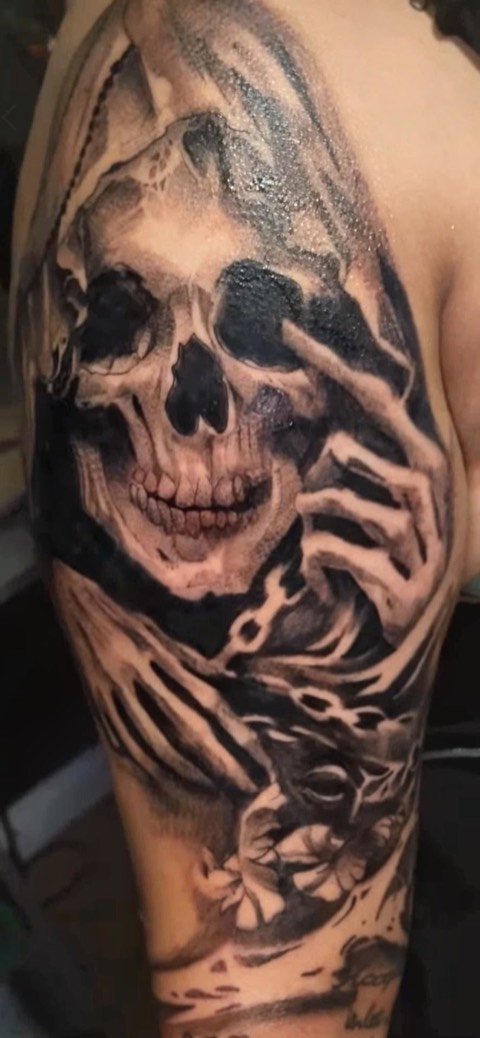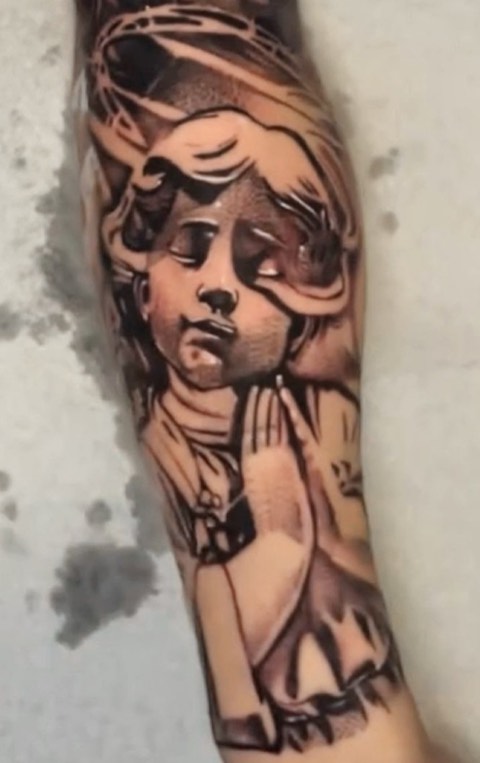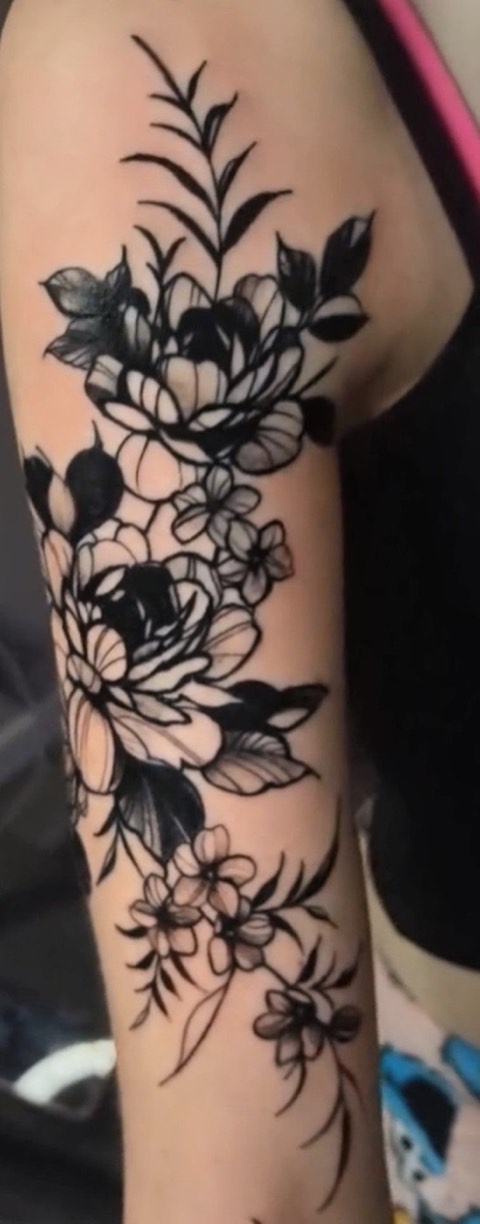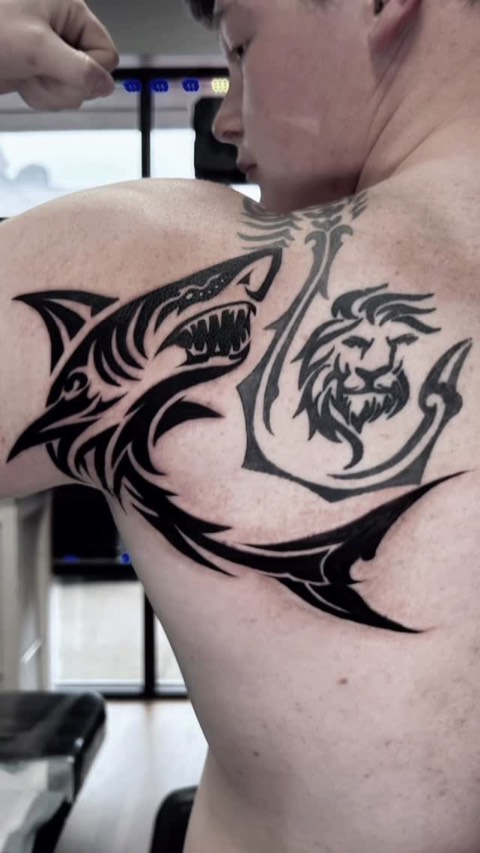
Cover Ups & Transformations
From something you hide to something you show. Turn something you no longer want to wear into something you're proud to show.
Second chances, done properly
A cover-up is the most constrained problem in tattooing: the new piece has to be beautiful on its own terms while completely absorbing what's underneath. Old ink doesn't vanish — it gets incorporated. Dark areas of the old tattoo have to land inside dark areas of the new one; old outlines have to dissolve into new texture. It's chess, played on skin, and it's a specialist skill that not every good artist has.
What actually determines success
Three things: how dark the existing tattoo is, how big the new design can be, and how honest everyone is at the consult. A faded grey tattoo offers enormous freedom; a saturated black one narrows the options toward darker, denser designs — or a session or two of laser fading first, which can open the door to almost anything. The new piece will nearly always need to be larger than the old one. An artist who promises a small, light cover-up over a dark tattoo is selling you a future regret.
Reworks and refreshes
Not everything needs burying. Plenty of tattoos are one rework away from being loved again — lines sharpened, contrast rebuilt, a weak design absorbed into a stronger composition around it. Sometimes the answer to "can you cover this?" is "we can save it instead," and that's usually the better outcome.
Cover-ups at Tough It Out
Transformative cover-ups are the specialty Julio built his reputation on — in his words, there's nothing like watching someone light up seeing something beautiful where a tattoo they'd outgrown used to be. Send a clear, well-lit photo of the existing tattoo through the form and you'll get an honest read on what it can become — cover, rework, or fade-first — before anyone books anything.
Photograph the old tattoo in daylight, straight on, before the consult. The honest options all start from seeing it clearly.
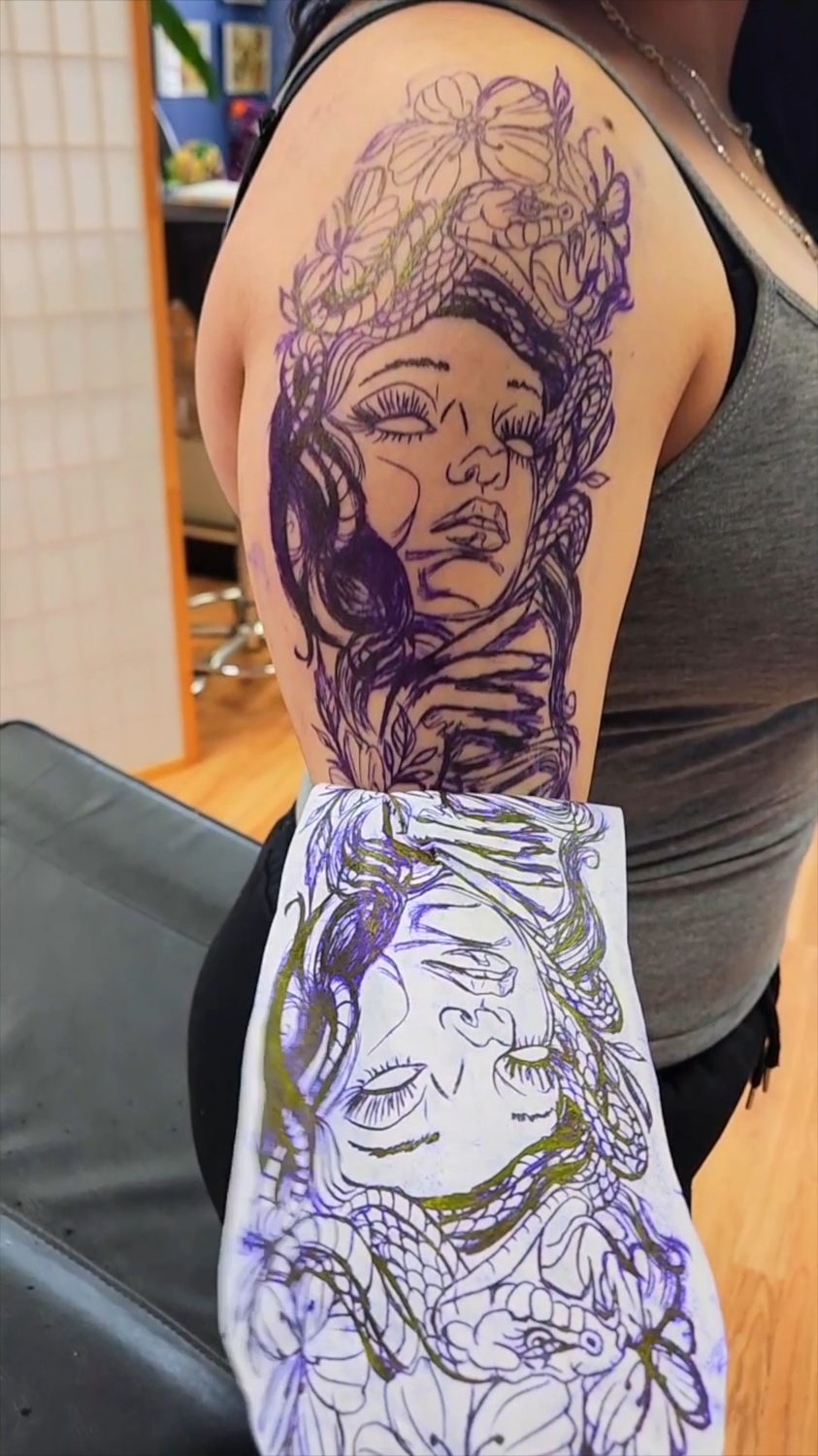
Tattoo rework being stencilled over existing ink before the session starts — from the shop's own work.