Black & Grey
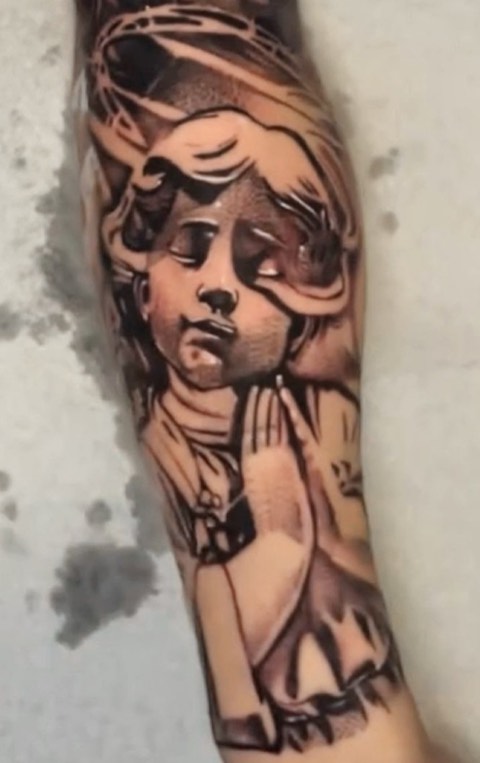
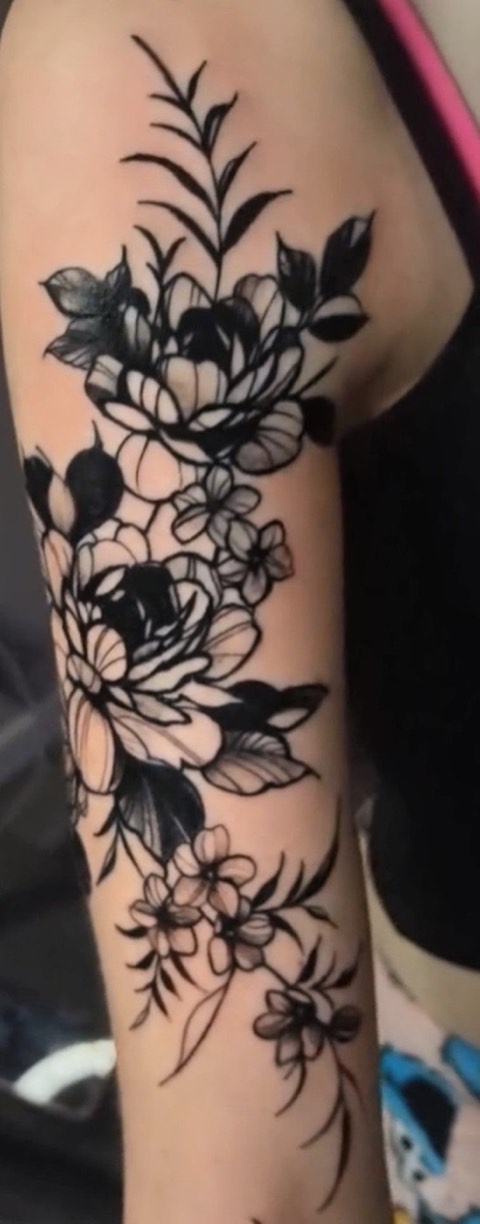
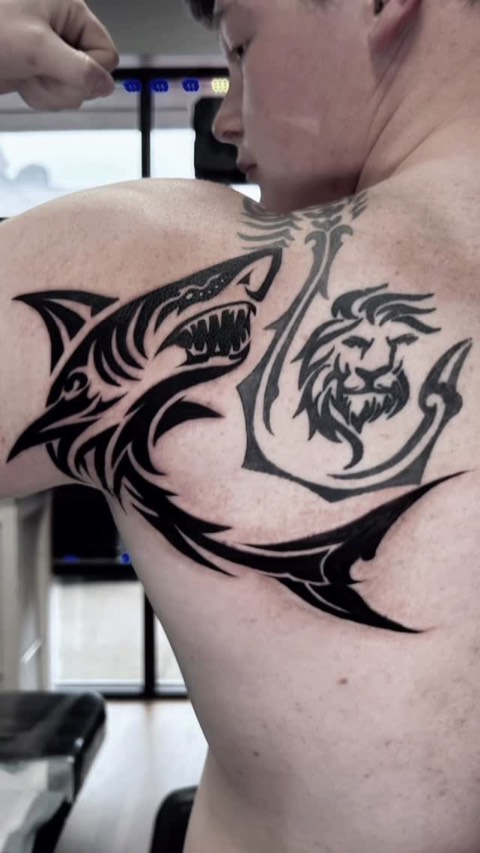
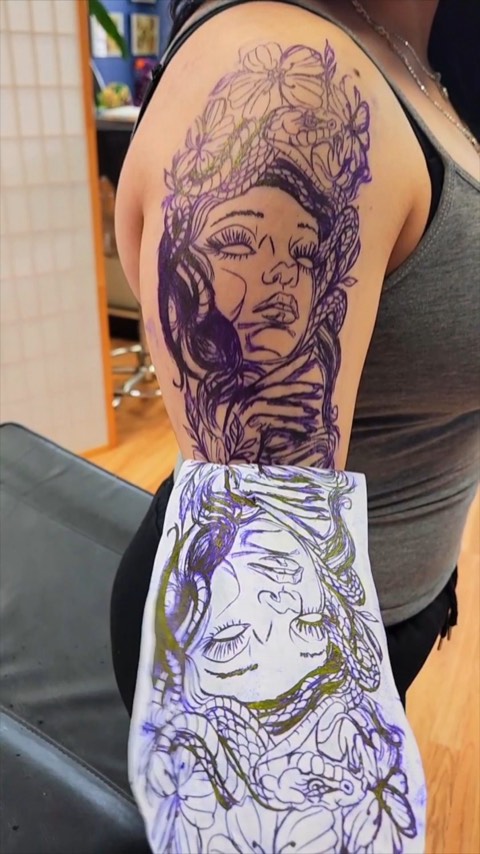
Everything carried by contrast. Depth, contrast and detail built to make the artwork feel alive.
Where black & grey comes from
Black and grey tattooing has one of the most distinctly American origin stories in the craft. It grew up in the 1970s and 80s in the Chicano communities of Southern California — including inside prisons, where colour ink didn't exist and machines were built from cassette motors and guitar strings. Artists learned to do everything with a single pigment: black, cut with water into an entire range of greys. What started as making do became a discipline of its own, and by the time it reached professional street shops it had turned into one of the most technically demanding styles in tattooing.
How the style actually works
A black and grey piece is built the way a charcoal drawing is built — from values, not lines. The artist dilutes black ink into a run of "washes," then layers them so that smoke drifts, skin folds, chrome reflects and shadows fall exactly where they should. There is nowhere to hide: with no colour to carry the eye, composition and contrast do all the work. A good black and grey tattoo reads clearly from across a room and rewards you again up close.
What people put in black & grey
The style suits weight. Religious imagery, memorial portraits, clocks and roses, skulls and reapers, Chicano lettering, statues and stonework, family imagery — subjects with real gravity tend to land better without colour, the same way certain photographs simply belong in black and white. It also ages predictably: black pigment is the most stable ink there is, so a well-executed black and grey piece softens gracefully instead of shifting hue.
Black & grey at Tough It Out
This is the backbone of what our shops do. Julio and Elias both work heavily in black and grey — sleeves, backpieces, religious work and memorial pieces — across both the Waukegan and Carpentersville studios. If you're planning a larger piece, bring the idea in early: black and grey rewards planning, and the artists would rather design the whole composition than patch it together one gap at a time.
Black heals the most reliably of any pigment — expect your piece to soften slightly as it settles, then hold for decades.
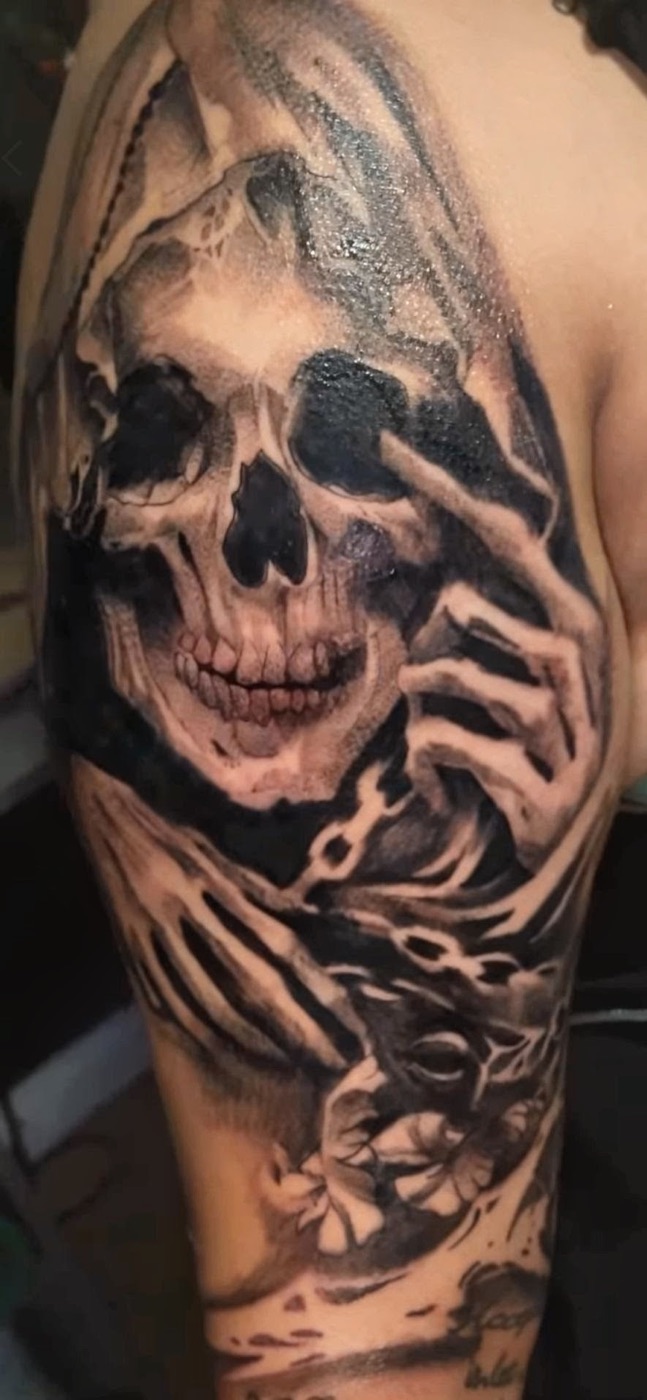
Black and grey skull and reaper sleeve tattoo — no colour, everything carried by contrast — from the shop's own work.